
Stop re-deciding
things you already decided.
The context layer for your engineering org
Corveil is queryable institutional memory for your engineering org — every decision, owner, and prior attempt, indexed against the code that shipped them.
Trusted by engineering teams at
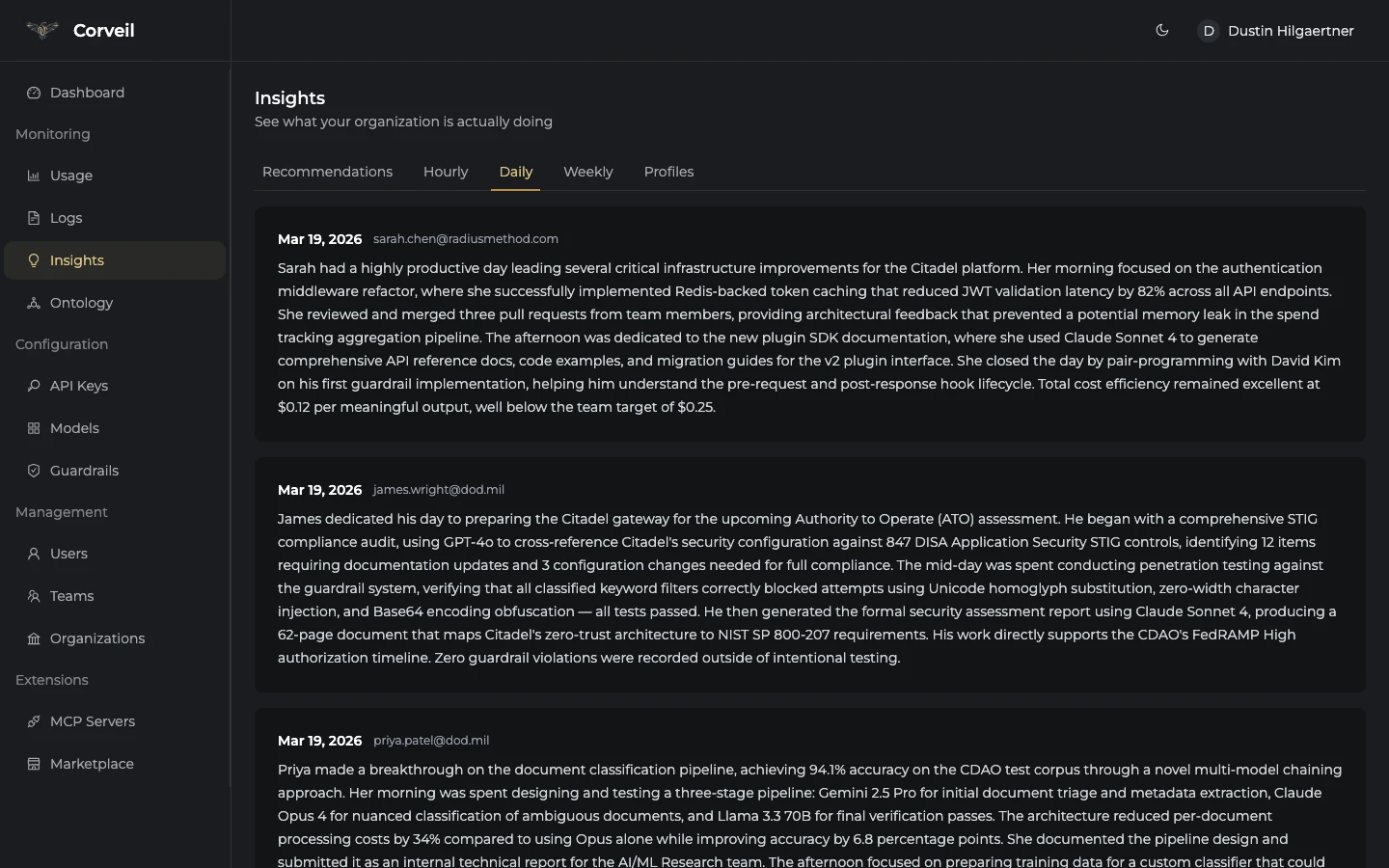
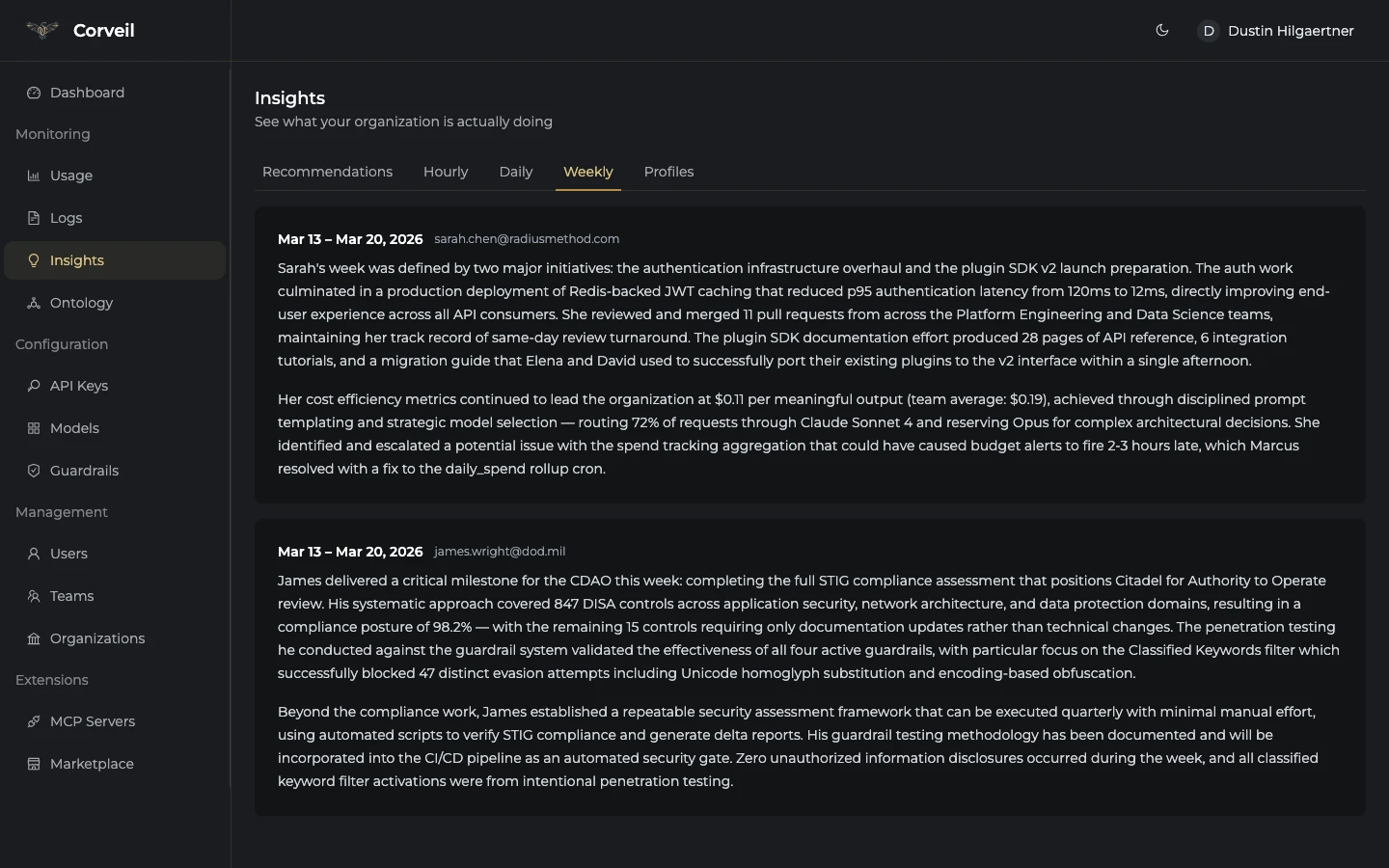
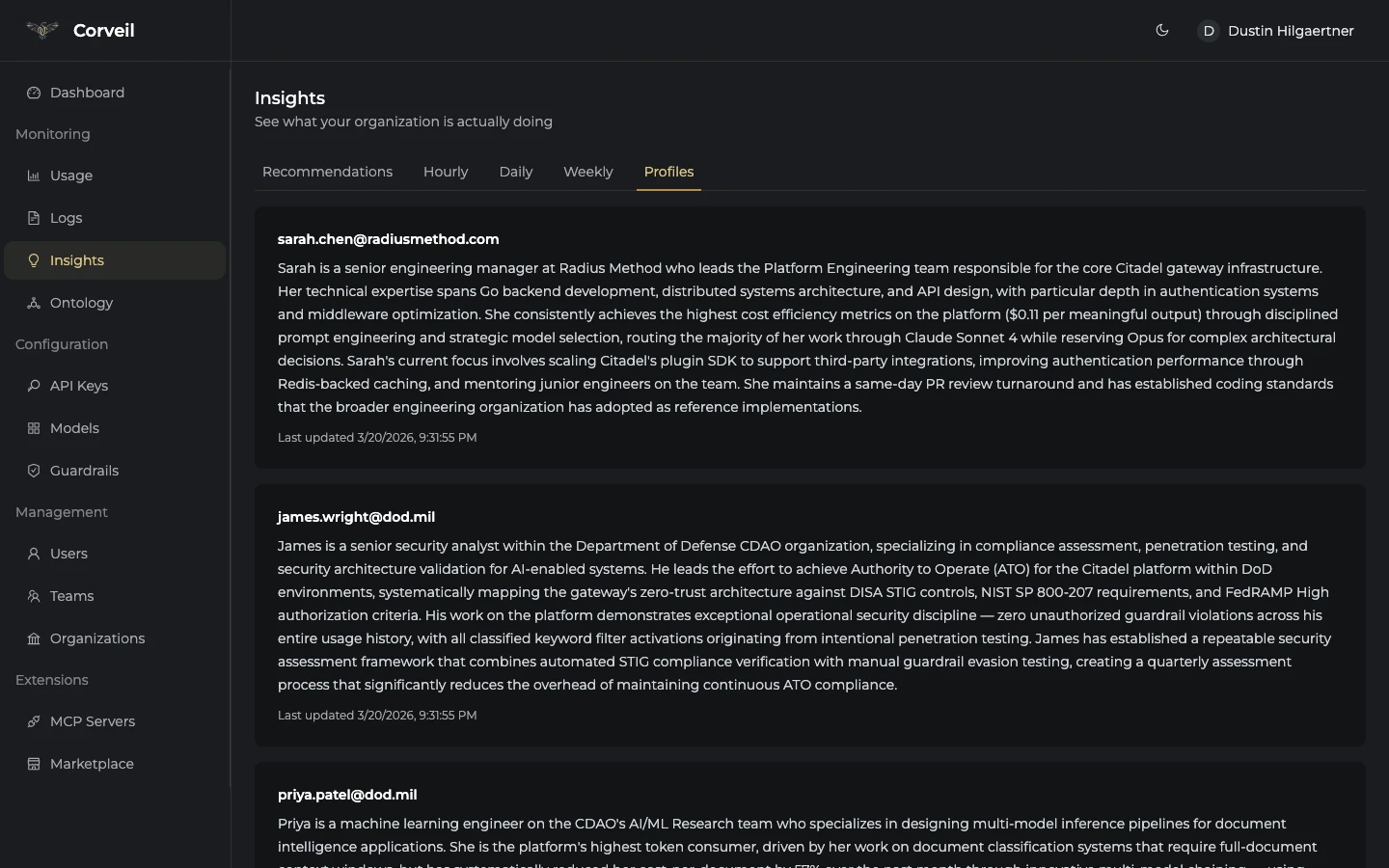
Insights Engine
See What Your Organization Is Actually Doing
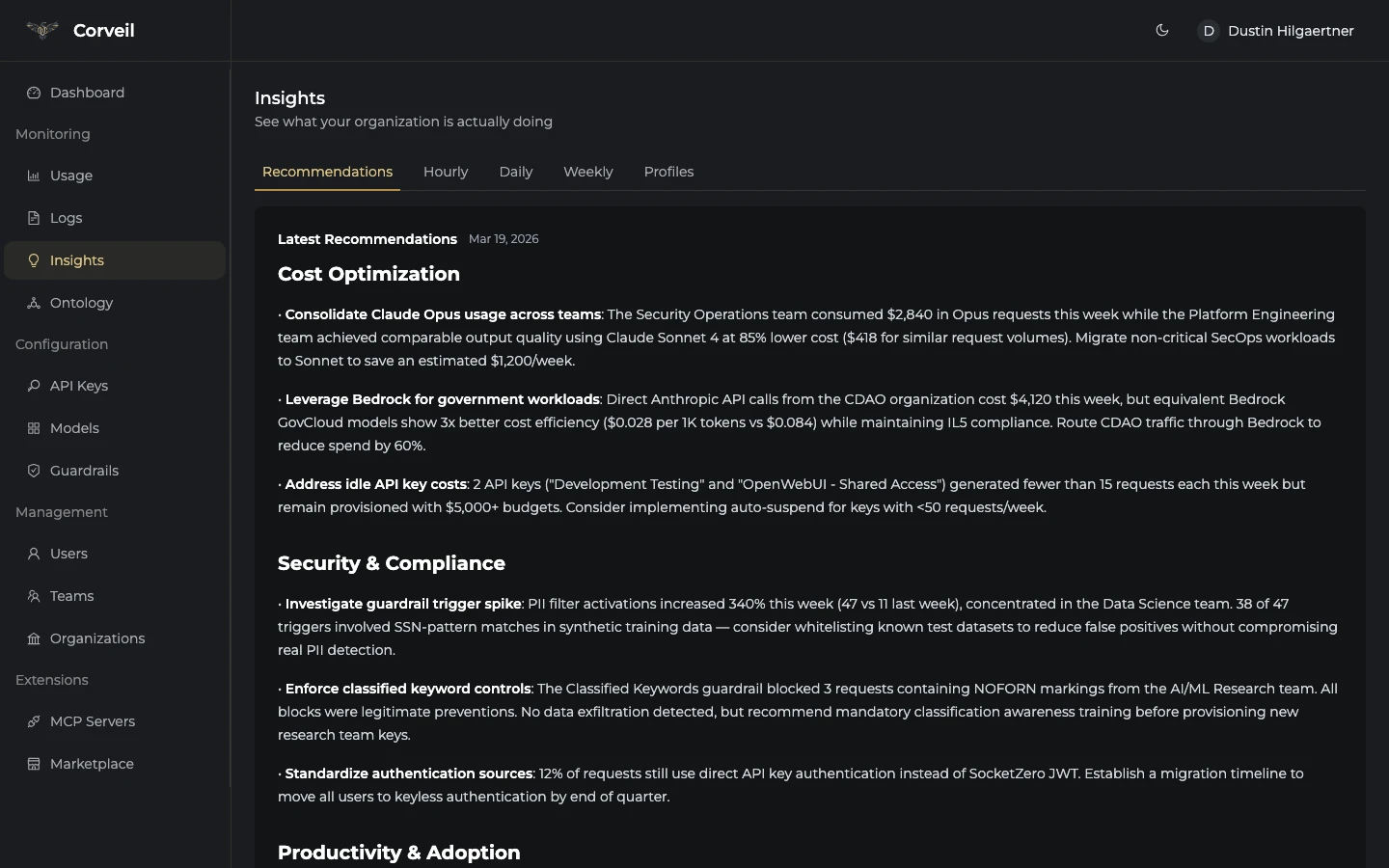
- Activity summaries — hourly, daily, and weekly digests. Know what happened without asking.
- User profiles — auto-built maps of expertise, projects, and focus areas.
- Recommendations — actionable suggestions for cost, productivity, and security posture.
- Trend detection — surface shifts in tool adoption and workflow changes as they happen.
See It In Action
Your Organizational Command Center
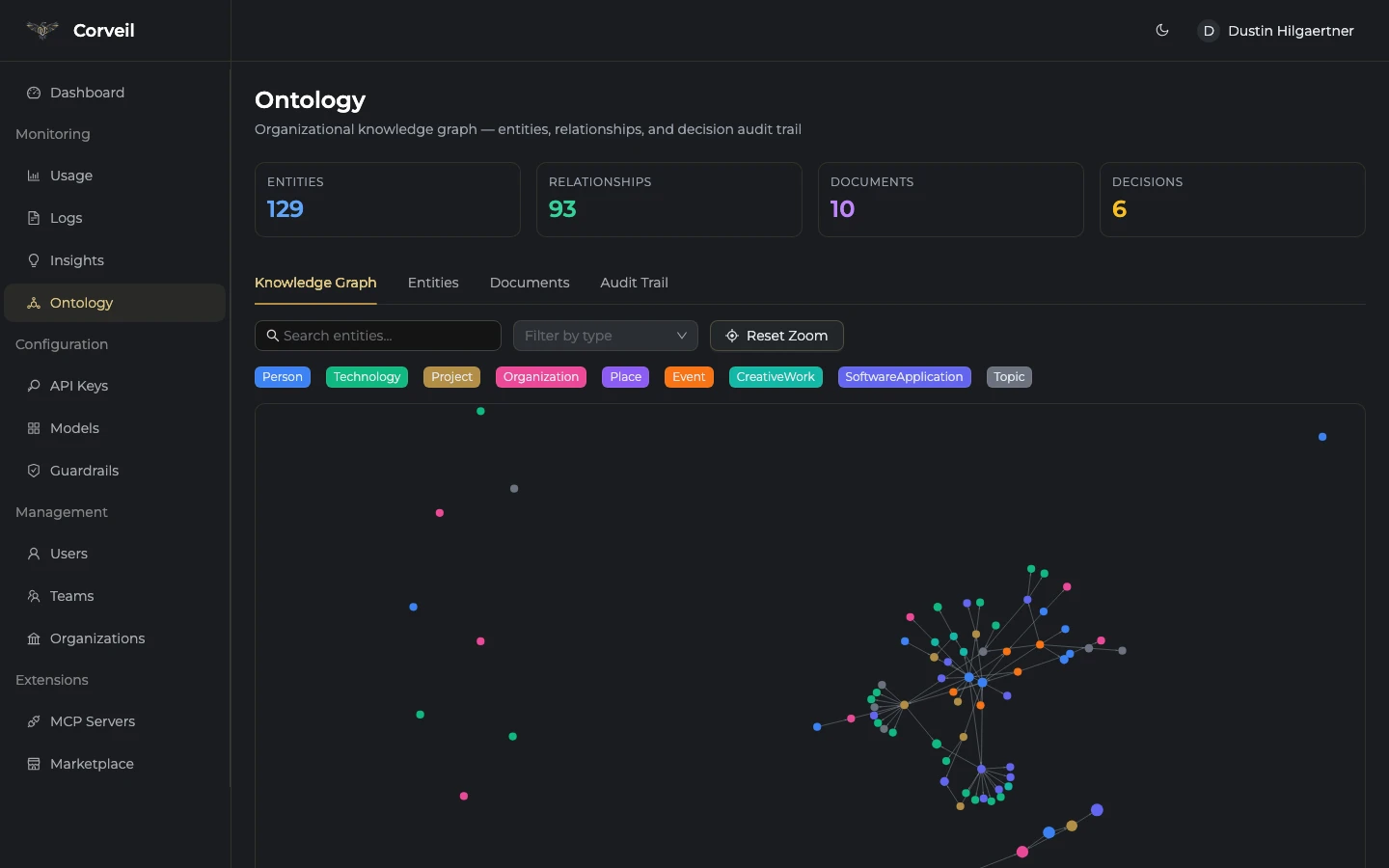
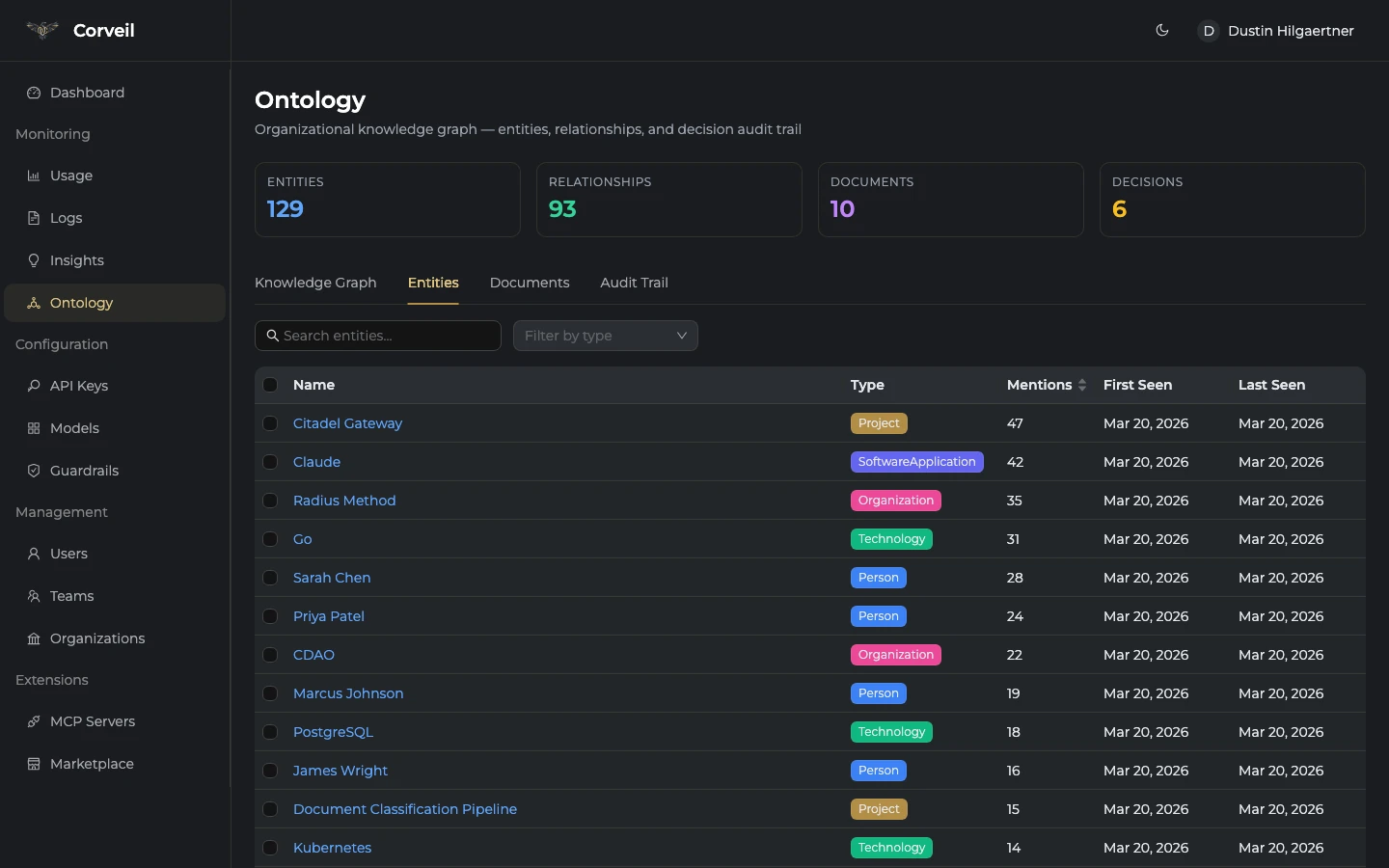
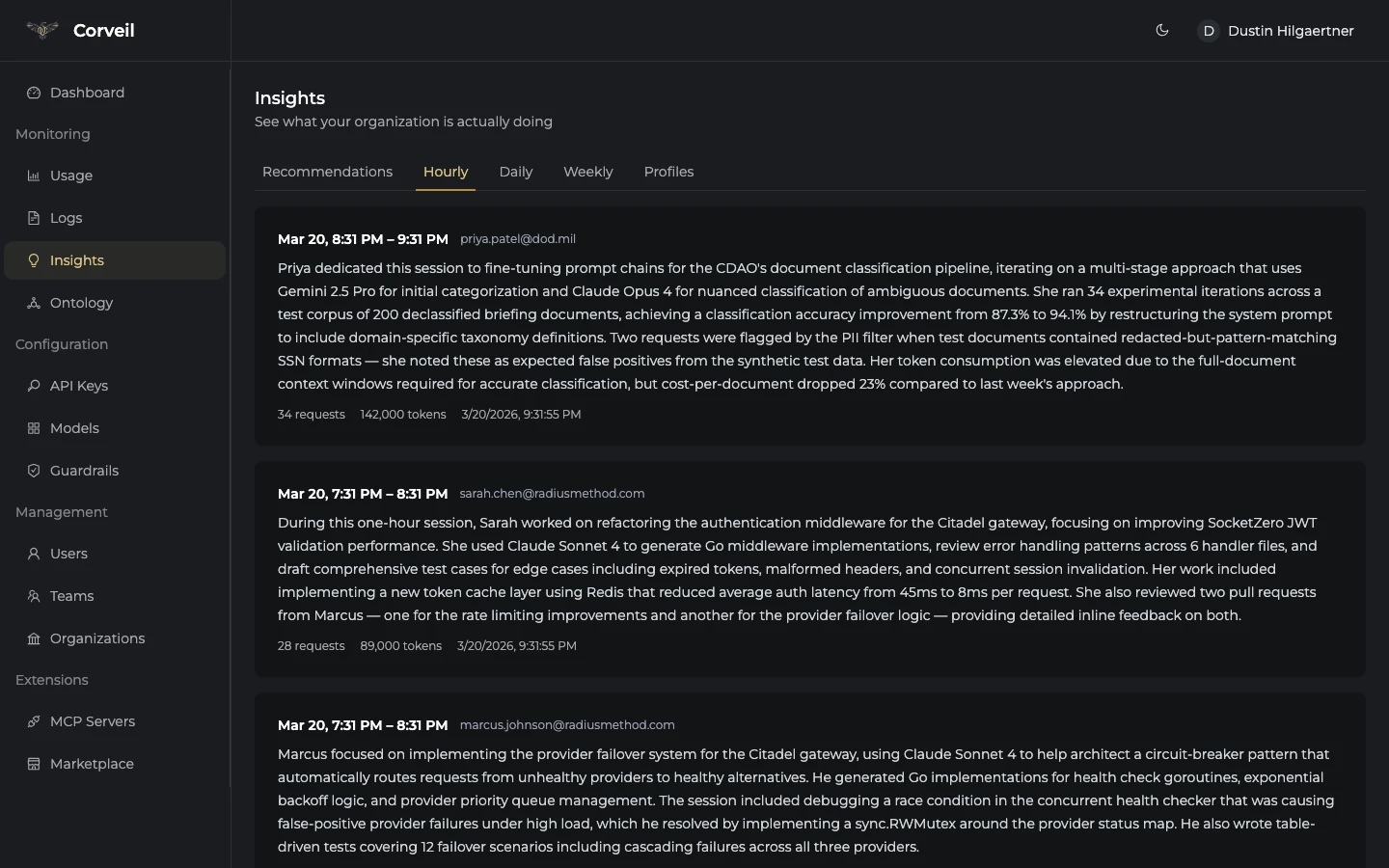
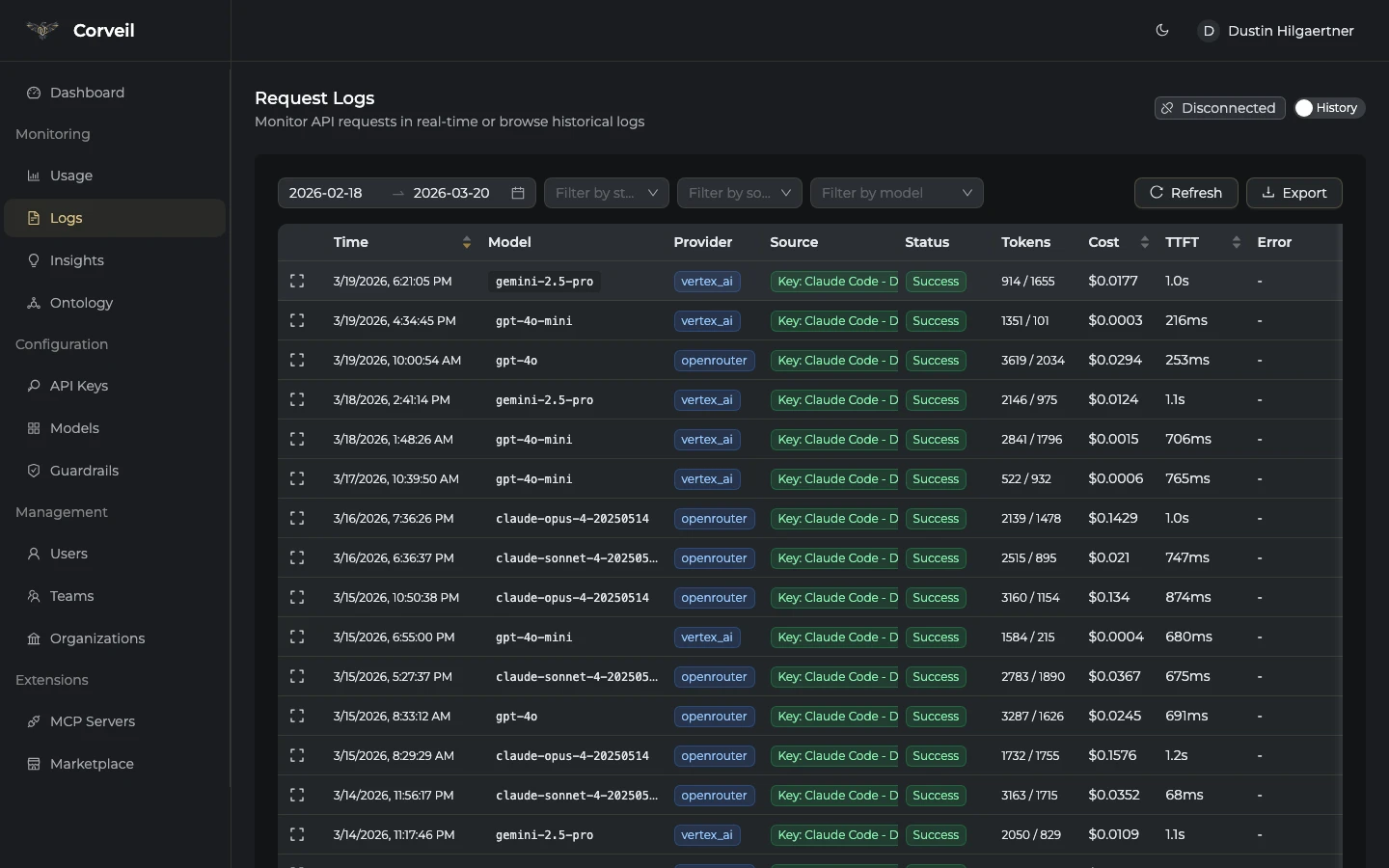
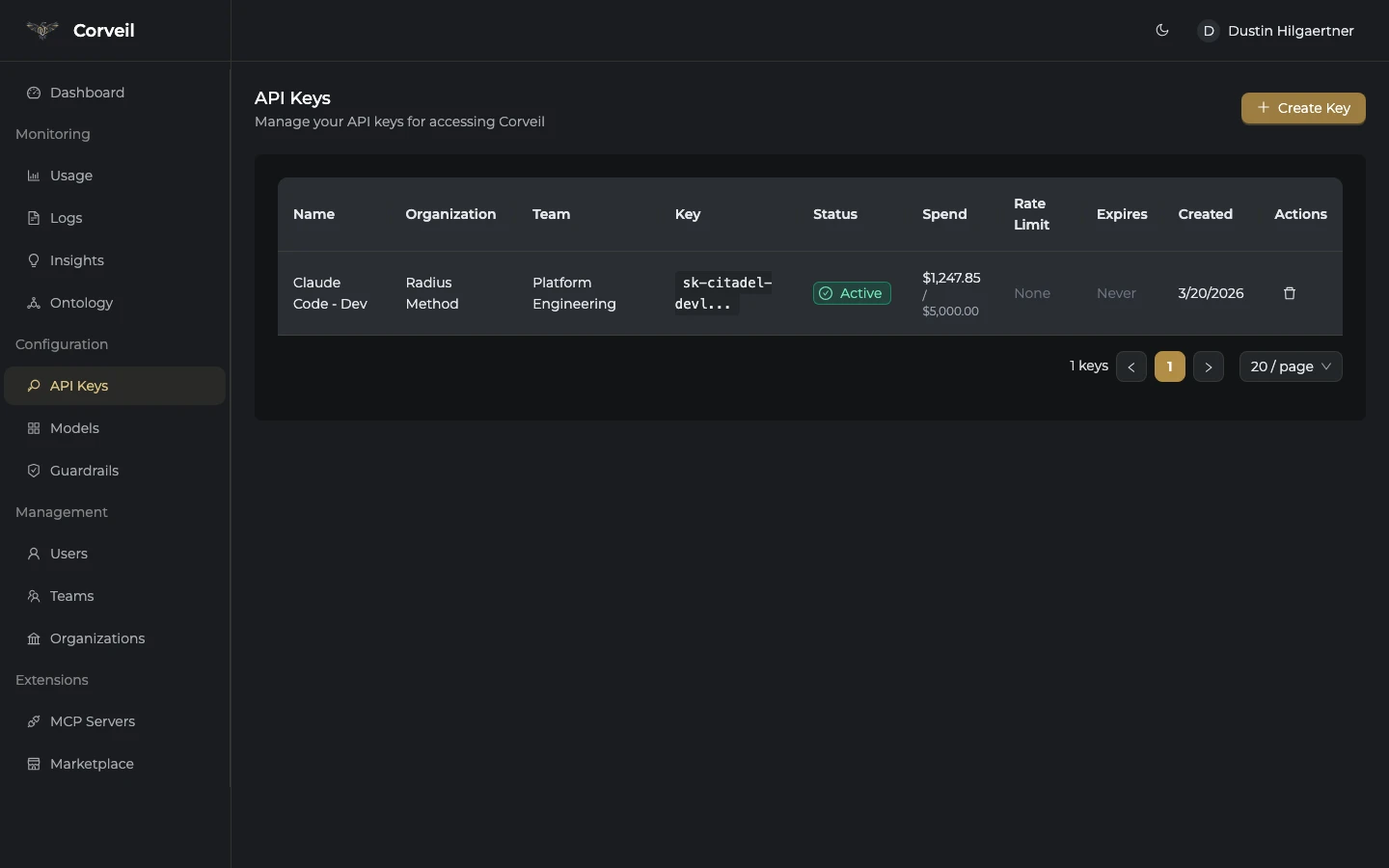
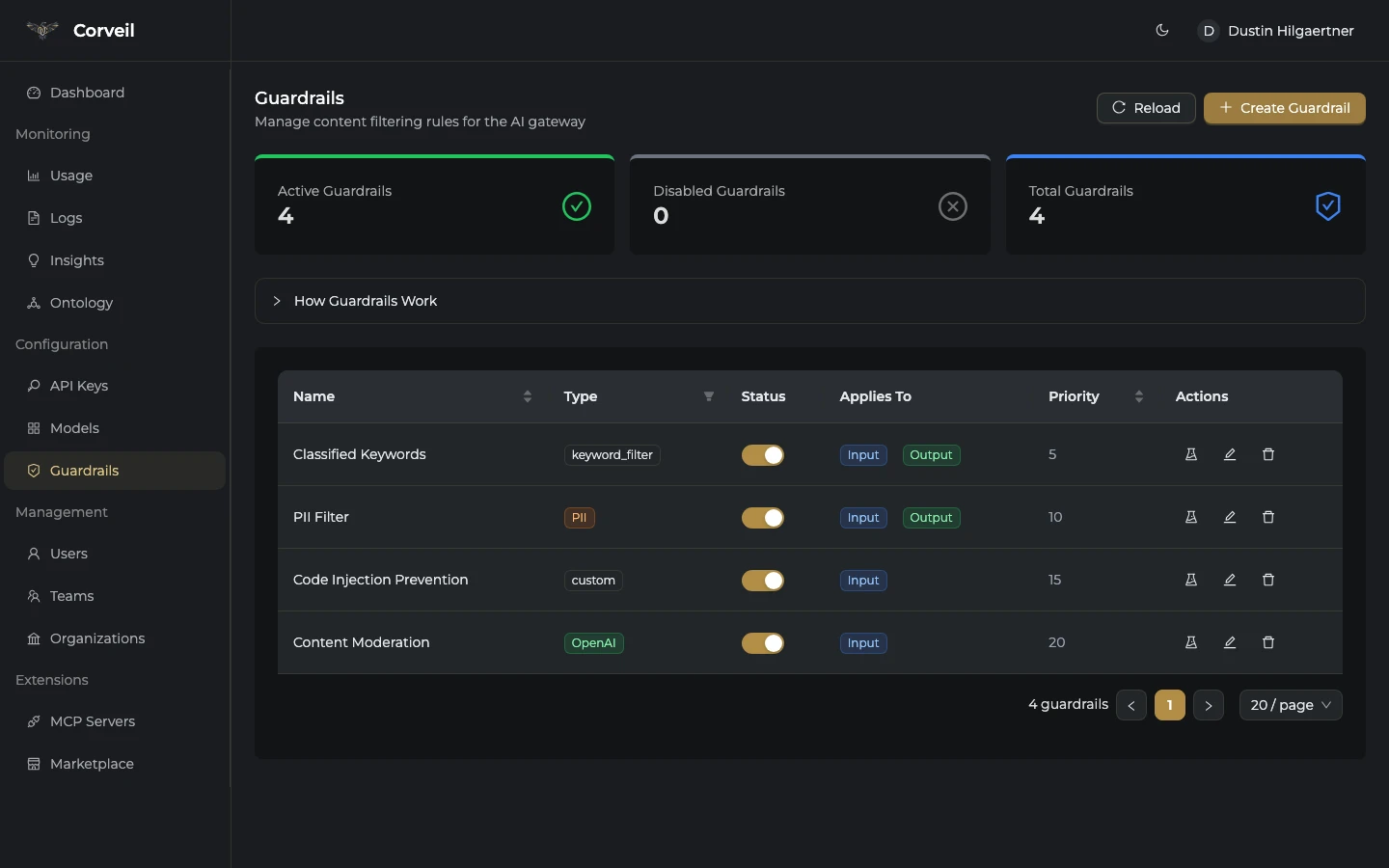
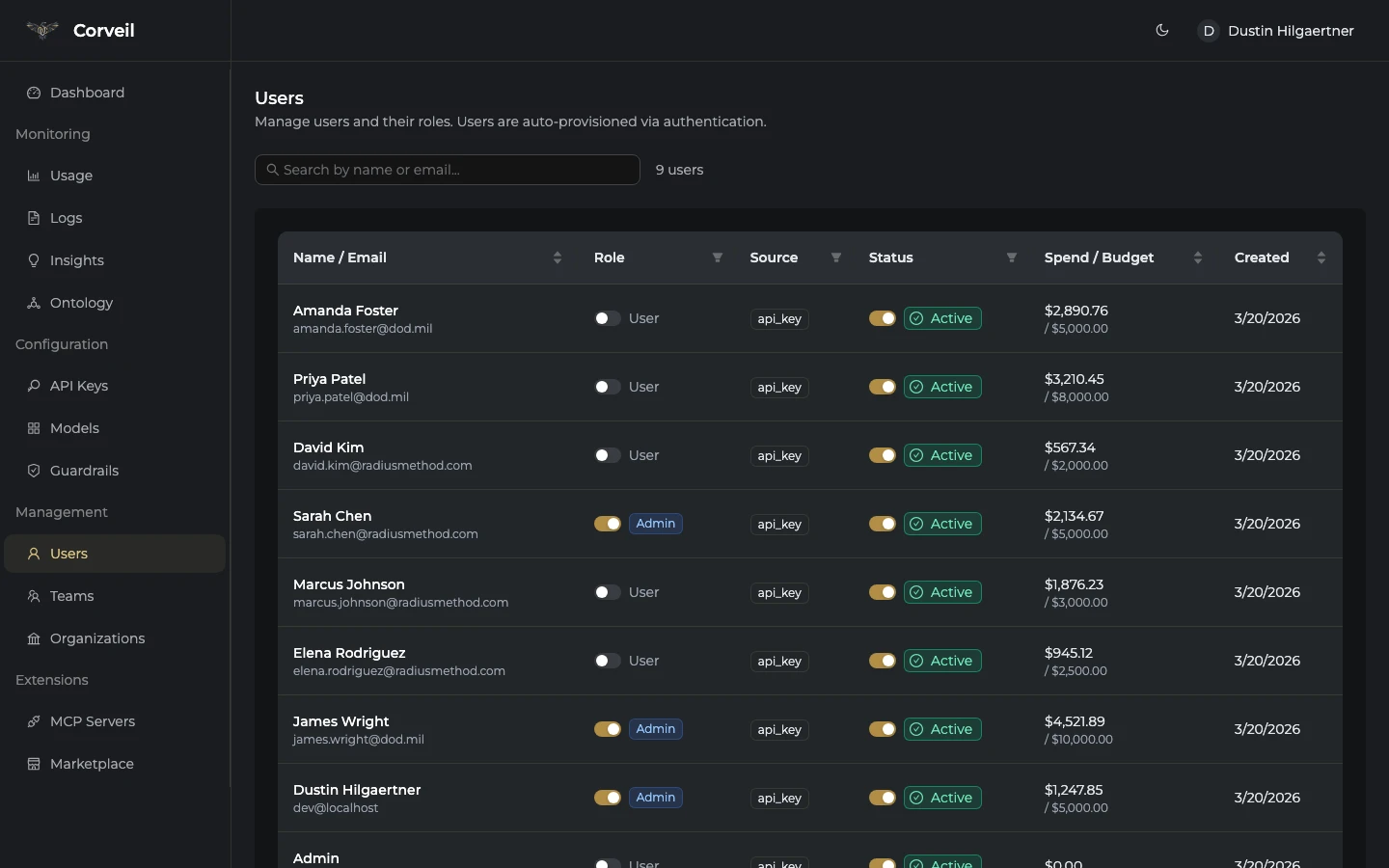
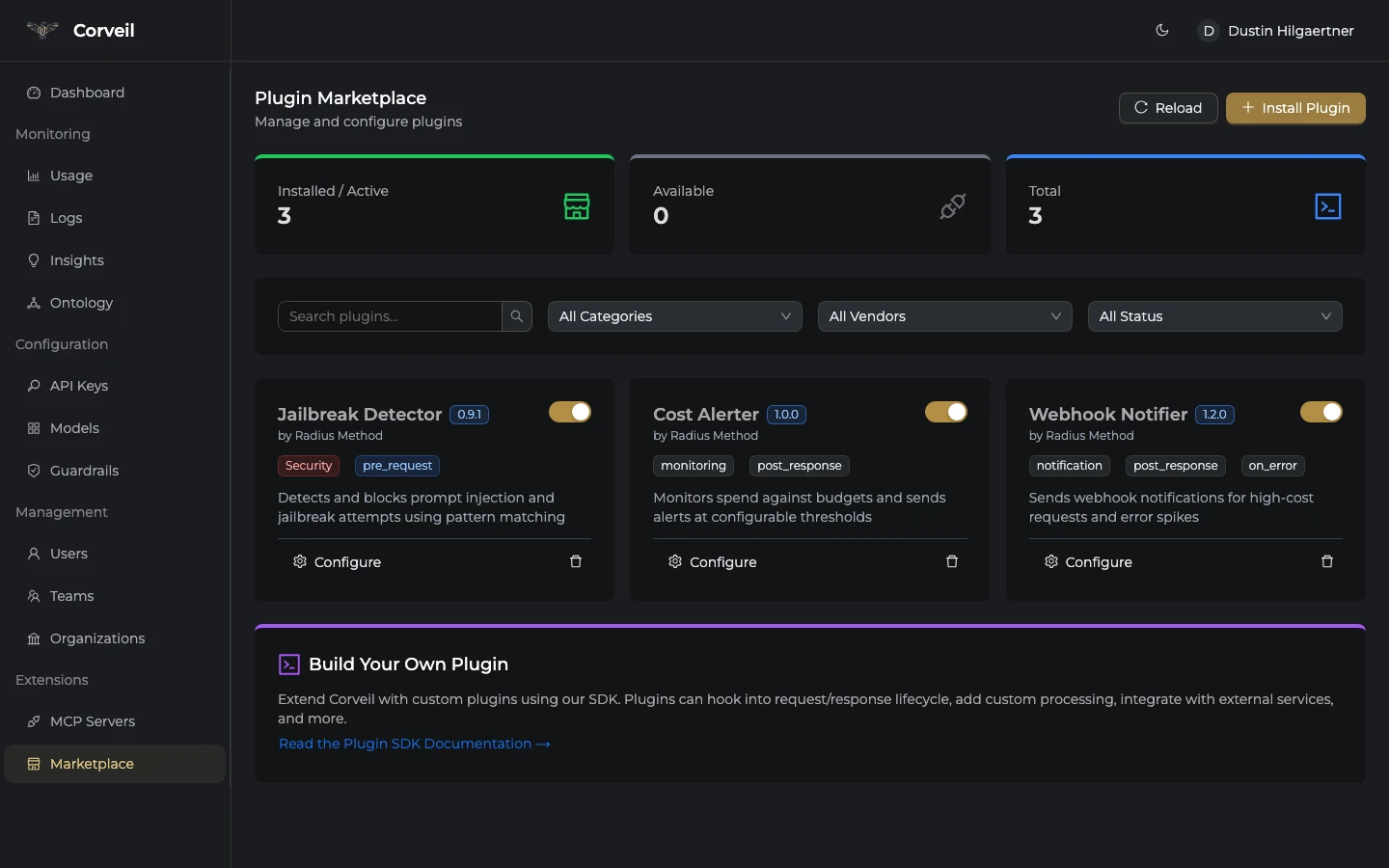
Insights — Recommendations
How It Works
Sign Up. Connect Your Tools. Get Answers.
Corveil is a managed SaaS for engineering context. Self-hosting is available when your environment requires it.
Sign Up
Start in Corveil Cloud and invite the teams whose decisions, code, and AI activity need shared context.
Connect
Connect coding agents, collaboration tools, repositories, and AI providers without changing the daily workflow.
Act
Get cited answers, scheduled briefs, Slack posts, PR comments, and drafted replies from the context Corveil keeps current.
Need to run Corveil yourself? See self-hosted install methods →
Platform
Managed Context Infrastructure for Engineering Organizations
Corveil Cloud turns your engineering activity into a living context layer, then uses that context to answer questions and take action.
Knowledge Graph
A living map of decisions, owners, prior attempts, and the code that shipped them.
ContextSensors
Connectors that keep Corveil current across AI tools, repositories, docs, meetings, and operational systems.
IngestionGateway
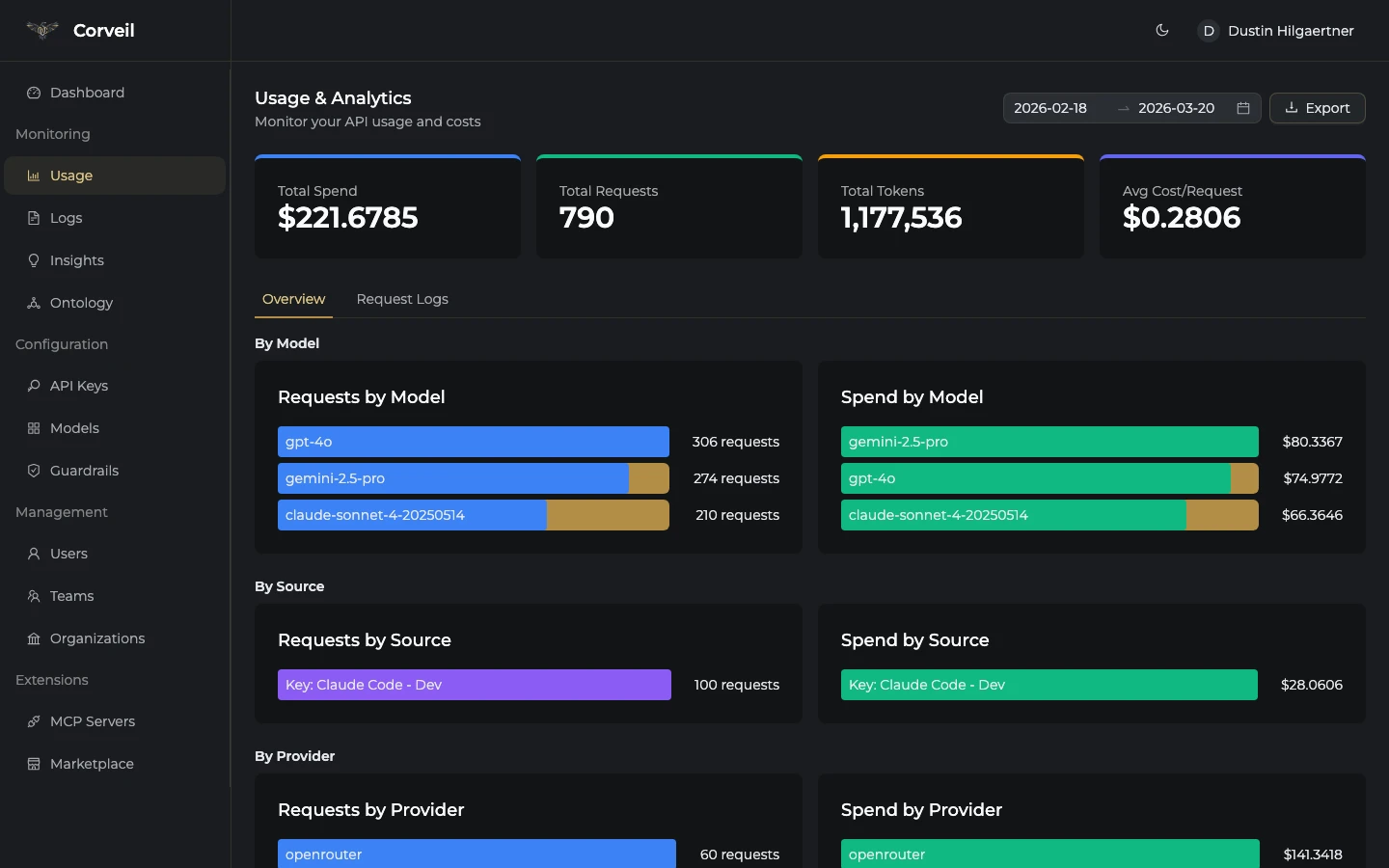
Managed AI routing, guardrails, spend controls, and audit logs for the model traffic you choose to route through Corveil.
ControlsBuilt For
Intelligence That Fits Your World
See What Your Organization Is Actually Doing
- Daily intelligence digests — know what happened without asking
- Execution tracking — compare daily activity against stated priorities
- Early warning signals — surface problems weeks before they reach a board deck
- Cost intelligence — AI spend visibility with optimization recommendations
- Knowledge graph — map who works on what across the entire organization
Context for the Agents Writing Your Code
- Decision archaeology — ask why a system is the way it is and get a cited answer from real history
- Coding-agent context — feed Claude Code, Cursor, and Codex the commits, meetings, and decisions they're missing before they write the wrong thing
- Knowledge graph — queryable map of decisions, owners, prior attempts, and the code that shipped them
- Plugin SDK — extend Corveil with custom integrations into your toolchain
- One endpoint, every model — OpenAI-compatible proxy across 200+ models via OpenRouter, Vertex AI, and Bedrock when you need it
Zero-Trust AI Governance
- Guardrails pipeline — pre/post-call content filtering on every request
- PII filtering — detect and redact sensitive data before it reaches providers
- FIPS 140-2 compliant — security headers, encryption, AWS GovCloud ready
- Full audit trail — every request and response, indexed and searchable
- Budget caps — per-user and per-team limits that stop spend at the threshold
“We went from quarterly guesswork to daily visibility. Corveil surfaces things we didn't even know to ask about.”
“The knowledge graph alone justified the deployment. We finally know who's working on what across 12 teams.”
“Deployed on a Friday, had actionable intelligence by Monday. No workflow changes, no surveys, just signal.”
Gateway
Optional Controls for Teams That Route AI Through Corveil
- Managed first — start with Corveil Cloud, then add gateway controls where they create value.
- Virtual API keys — scoped credentials per user and team. Provider keys never exposed.
- Spend tracking & budgets — real-time cost tracking with hard limits and alerts.
- Guardrails — pre/post-call content filtering. PII detection, jailbreak prevention, inline.
- Multi-provider routing — 200+ models through OpenRouter, Vertex AI, and Bedrock.
- Self-hosted option — run Corveil in your infrastructure when policy requires it. See install methods →
  Claude Code   Cursor   aichat   Codex   OpenClaw
       \        |       |       |       /
        \       |       |       |      /
   ┌────────────────────────────────────────┐
   │            C O R V E I L               │
   │                                        │
   │  Auth → Guardrails → Route → Log       │
   │            Insights Engine             │
   └────────────────────────────────────────┘
        /       |       |       \
       /        |       |        \
  OpenRouter  Vertex AI  Bedrock  Azure
  200+ models  Gemini   GovCloud  OpenAI
Connect Your AI Tools
Works with the Tools You Already Use
Point your favorite AI tool at Corveil. No SDK changes required.
aichat
Terminal AI chat. YAML config, OpenAI-compatible.
DirectClaude Code
Anthropic's CLI agent. Direct and Passthrough modes.
Direct + PassthroughOpenClaw
AI gateway client with custom header support.
PassthroughCursor IDE
AI code editor. GUI-based endpoint config.
DirectOpenCode
Open-source terminal coding assistant.
DirectCodex CLI
OpenAI's coding agent with custom TLS.
DirectFAQ
Frequently Asked Questions
What is Corveil?
Corveil is an organizational intelligence platform that acts as a zero-trust AI gateway. It routes LLM requests through a single secure endpoint while capturing knowledge about how your organization uses AI — building a knowledge graph of people, projects, technologies, and decisions.
Is Corveil free?
Yes. Corveil is free to download and run. The binary ships as a single static executable. Bring up the included Postgres + pgvector docker-compose alongside it and you have a fully functional gateway with an admin dashboard and all features enabled.
Does Corveil work with Claude Code?
Yes. Claude Code connects to Corveil by setting ANTHROPIC_BASE_URL to your Corveil instance. Corveil supports both Direct mode (Corveil provides the API key) and Passthrough mode (Claude Code Max users route through Corveil for logging and guardrails while using their own subscription).
What is organizational intelligence?
Organizational intelligence is the understanding of who knows what, who works on what, and how your organization actually operates. Corveil builds this automatically by analyzing AI activity — extracting entities like people, projects, and technologies from conversations and mapping the relationships between them into a searchable knowledge graph.
What LLM providers does Corveil support?
Corveil supports Anthropic (Claude), OpenRouter (200+ models including GPT-4, Llama, Mistral), Google Vertex AI (Gemini), and AWS Bedrock (including GovCloud). All providers are accessed through a single OpenAI-compatible API endpoint.
Does Corveil support self-hosted deployments?
Yes. Corveil is designed for self-hosted deployment. It ships as a single Go binary that runs anywhere — bare metal, Docker, Kubernetes (via Helm chart), or cloud platforms like AWS GovCloud. Your data never leaves your infrastructure.
How is Corveil different from other AI gateways?
Most AI gateways are proxies — they route traffic and log requests. Corveil does that too, but it also builds organizational intelligence: a knowledge graph that maps relationships across people, projects, and technologies, plus an insights engine that produces daily and weekly activity summaries. It is the difference between a proxy and a platform.
Lift the Veil on Your Organization
Book a 15-minute walkthrough and see what Corveil reveals about your AI activity.